Skip to content
Rooted in community. Committed to your comfort.Specials & coupons ↗(859) 203-8584

Our why / Indoor air quality

Care for the air your family shares.

Allergens, musty odors, and concerns about airborne germs deserve clear answers. Let’s build an air-quality plan around your home and the people in it.

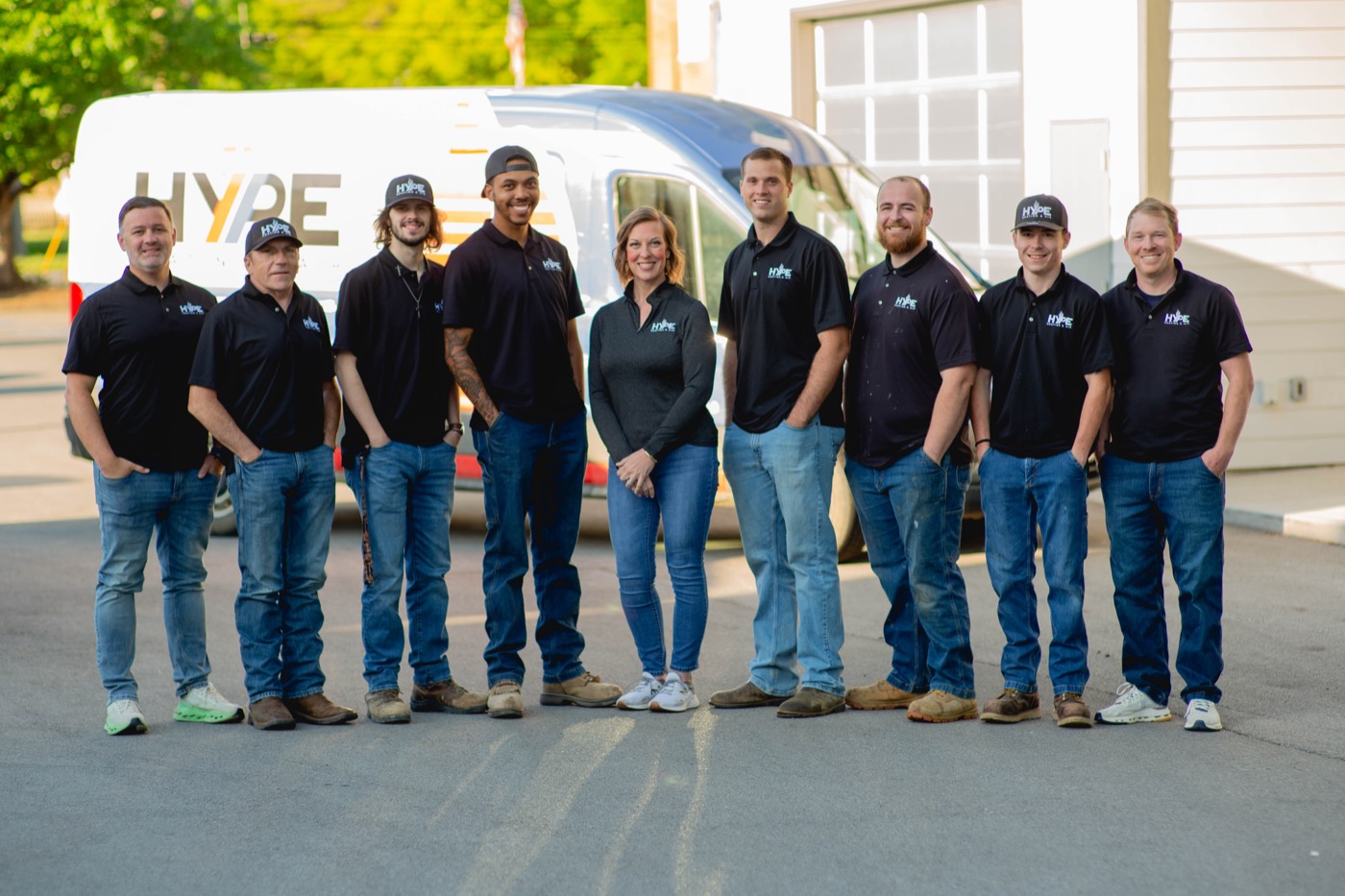
The HYPE Heating & Air team standing together beside a HYPE van
PEOPLE WHO CARE.Your HYPE team · Spring 2026

Our why

Start with what you’re noticing.

Allergens & reactions

Pollen, pet allergens, dust-mite allergens, and mold spores can be concerns indoors. Mold can trigger sneezing, a runny nose, itchy eyes, or asthma symptoms in sensitive people. Symptoms alone cannot identify the source; persistent concerns belong with your healthcare professional.

Bacteria & viruses

If bacterial or viral infections are on your mind, air cleaning can be one part of an indoor-air plan. Reducing a tested organism is different from proving fewer infections in a household. Neither REME product is a treatment or a promise that your family won’t get sick.

Mold & microbial growth

Airborne mold spores and growth on damp materials are different problems. Moisture supports mold growth. A purifier cannot repair a leak, dry a wet wall, or remove existing mold. Musty odors or visible growth call for finding the moisture source and appropriate cleanup.

Our how

Look at the whole home.
Choose the right layers.

HYPE starts with your concerns, then reviews filtration, airflow, humidity, and HVAC compatibility.

Particle capture comes first when allergens are the concern. We can discuss a better HVAC filter that your system can support, or a properly sized portable HEPA cleaner. Cleaning, source control, ventilation when appropriate, and humidity management all have a role.

Purification is an additional option to evaluate—not a replacement for those basics. Allergy specialists note that evidence for filtration does not establish allergy benefits for UV/ionizing purifiers.

Read allergy specialists’ guidance on air filters ↗
Our what / Whole-home purification

REME HALO or REME HALO Zero?

Both install in compatible HVAC ductwork. Here’s how the current manufacturer-listed models compare.

REME-H-T

REME HALO®

RGF describes this in-duct system as producing low concentrations of airborne hydrogen peroxide and bipolar ions to target bacteria, viruses, mold spores, odors, and airborne particles.

Technology
REME® cell with UV-C and ionization
Listed system range
2.5–6 tons · 800–2,400 CFM
Electrical
24 VAC · 0.7 A · 17 W
Replacement cell
PHIC-RH
Cell replacement guidance
18,000–25,000 operating hours; timer-equipped models include a replacement reminder.
U.S. limited warranty
5 years ballast / 2 years cell, subject to manufacturer terms.
View RGF’s model details ↗

ZERO-H4-AC-T

REME HALO® Zero

RGF describes this in-duct system as targeting bacteria, viruses, mold spores, odors, allergens, and dust using airborne gaseous hydrogen peroxide and bipolar ions.

Key distinction: RGF lists HALO Zero as verified to UL 2998 for zero ozone emissions. That certification addresses ozone emissions; it does not certify allergy relief or infection prevention.

Technology
aGHP-Cell™ with UV-C and ionization
Listed system range
2–6 tons · 800–2,400 CFM
Electrical
24 VAC · 0.7 A · 17 W
Replacement cell
PHIC-RH-3
Cell replacement guidance
18,000–25,000 operating hours; timer-equipped models include a replacement reminder.
U.S. limited warranty
5 years ballast / 2 years cell, subject to manufacturer terms.
View RGF’s model details ↗

Model generations and installation requirements vary. HYPE will confirm the exact model, duct space, airflow, electrical supply, maintenance schedule, and installed scope before recommending equipment. The original REME HALO should not be assumed to share HALO Zero’s ozone certification. Ozone can irritate the lungs, so emissions are part of the conversation.

Our what / Indoor-unit UV-C care

A cleaner coil. Less microbial buildup.

The cooling coil and condensate pan spend time wet. A correctly placed UV-C light can help control bacteria, mold, and biofilm on surfaces the light reaches.

Target the damp surfaces

Unlike an active whole-home purifier, a coil-treatment UV-C lamp is aimed at the evaporator coil and, where the layout allows, the drain pan. Continuous exposure helps limit microbial growth on those illuminated surfaces. Coverage, lamp output, and operating conditions matter.

Help reduce a source of drain slime

Microbial biofilm can create slimy buildup in the condensate pan. Limiting that growth may help reduce one contributor to slime-related drain clogs. This is a supporting benefit, not a guarantee: light cannot treat shaded areas or reach around bends inside the drain pipe.

Keep drain maintenance in the plan

UV-C does not clear an existing blockage or prevent clogs from dirt, debris, or drainage problems. HYPE can inspect the pan, trap, and line, address a blockage, and discuss routine cleaning and overflow protection. Lamp replacement and proper placement remain essential.

HYPE will check equipment compatibility and protect UV-sensitive components. UV-C belongs inside a properly installed system with service precautions that prevent eye and skin exposure. Treating coil surfaces alone does not establish that air moving past the lamp is disinfected or that household infections are prevented.

ASHRAE: UV treatment of coils & drain pans ↗ · AHRI: UV placement & maintenance ↗

Clear expectations

What can you reasonably expect?

Will REME HALO prevent infections or cure allergies?

No such outcome is promised. RGF’s pollutant-reduction claims do not establish that an installed unit will prevent bacterial or viral infections, treat an illness, or relieve a particular person’s allergies. Results depend on the home, installation, airflow, pollutant sources, and maintenance.

Can a purifier stop mold from growing?

It may be considered for airborne-pollutant reduction, but it cannot solve the underlying moisture problem or substitute for mold cleanup. Fix leaks, address condensation and humidity, and arrange appropriate remediation where needed.

What about filters, humidity, and airflow?

Keep using and replacing the correct HVAC filter. Higher particle capture must be balanced against pressure drop and system airflow. Humidity equipment needs suitable capacity, drainage, controls, and maintenance. We’ll explain which combination fits your home.

Learn more: EPA: mold, health & moisture ↗ · EPA: home air cleaners & filters ↗

04 / Our price

You deserve to understand
what you’re paying for.

The right recommendation starts with your home, your priorities, and your budget.

A repair price depends on the diagnosis, parts, and work involved. A replacement quote also considers system size, efficiency, ductwork, electrical work, and installation conditions.

Repair

Understand the problem and the proposed work before deciding.

Replacement

Compare equipment, installation scope, and warranty terms in writing.

Payment

Ask about current financing options and review the lender’s terms before applying.

Explore pricing & financing

Your next step

Let’s talk about your home.

Tell us what’s happening. We’ll help you understand the next step.